
Telehealth has transformed addiction care by making treatment more accessible and flexible.
With 20.4 million Americans diagnosed with substance use disorders, these tools tackle barriers like transportation, childcare, and stigma. Modern platforms offer features like virtual counseling, secure e-prescribing, and patient monitoring, ensuring effective care remotely.
Below are seven tools that stand out:
Opus Behavioral Health EHR: Combines telehealth, e-prescribing, and patient monitoring in one platform for streamlined addiction care.
SoberTool: A mobile app offering real-time exercises, medication reminders, and strategies to manage cravings.
SoberWorx: An online directory connecting users to recovery services like therapy and sober living homes.
I Am Sober: Tracks sobriety milestones, provides peer support, and includes tools like daily pledges and progress tracking.
Nomo: Features sobriety clocks and peer accountability to keep users motivated.
WEconnect: Offers virtual counseling, activity tracking, and tools for managing triggers and stress.
rTribe: Combines professional counseling with peer support for 24/7 assistance.These tools cater to various needs, from clinical management to personal recovery support, helping patients stay on track and connected throughout their journey.
Quick Comparison:
|
Tool |
Virtual Counseling |
E-Prescribing |
Patient Monitoring |
Platform Access |
Main Benefit |
|---|---|---|---|---|---|
|
Opus Behavioral Health EHR |
Integrated video sessions |
Yes |
MAT dosing, lab results |
Web, iOS, Android |
All-in-one addiction care tool |
|
SoberTool |
Crisis text support |
No |
Cravings and trigger tracking |
iOS, Android |
Immediate recovery support |
|
SoberWorx |
Peer support messaging |
No |
Sobriety counter, mood logs |
iOS, Android |
Directory for recovery services |
|
I Am Sober |
Community forums |
No |
Streak tracking, pledges |
iOS, Android |
Motivation through gamification |
|
Nomo |
No |
No |
Sobriety clocks, milestones |
iOS, Android |
Visual progress tracking |
|
WEconnect |
Group video sessions |
No |
Activity logs, trigger tools |
Web, iOS, Android |
Structured recovery programs |
|
rTribe |
1:1 scheduled sessions |
No |
Milestone tracking |
Web, iOS, Android |
24/7 peer and professional support |
Select a platform that aligns with your recovery or treatment goals. Whether you need advanced clinical tools or personal recovery apps, these options provide effective ways to support addiction care.
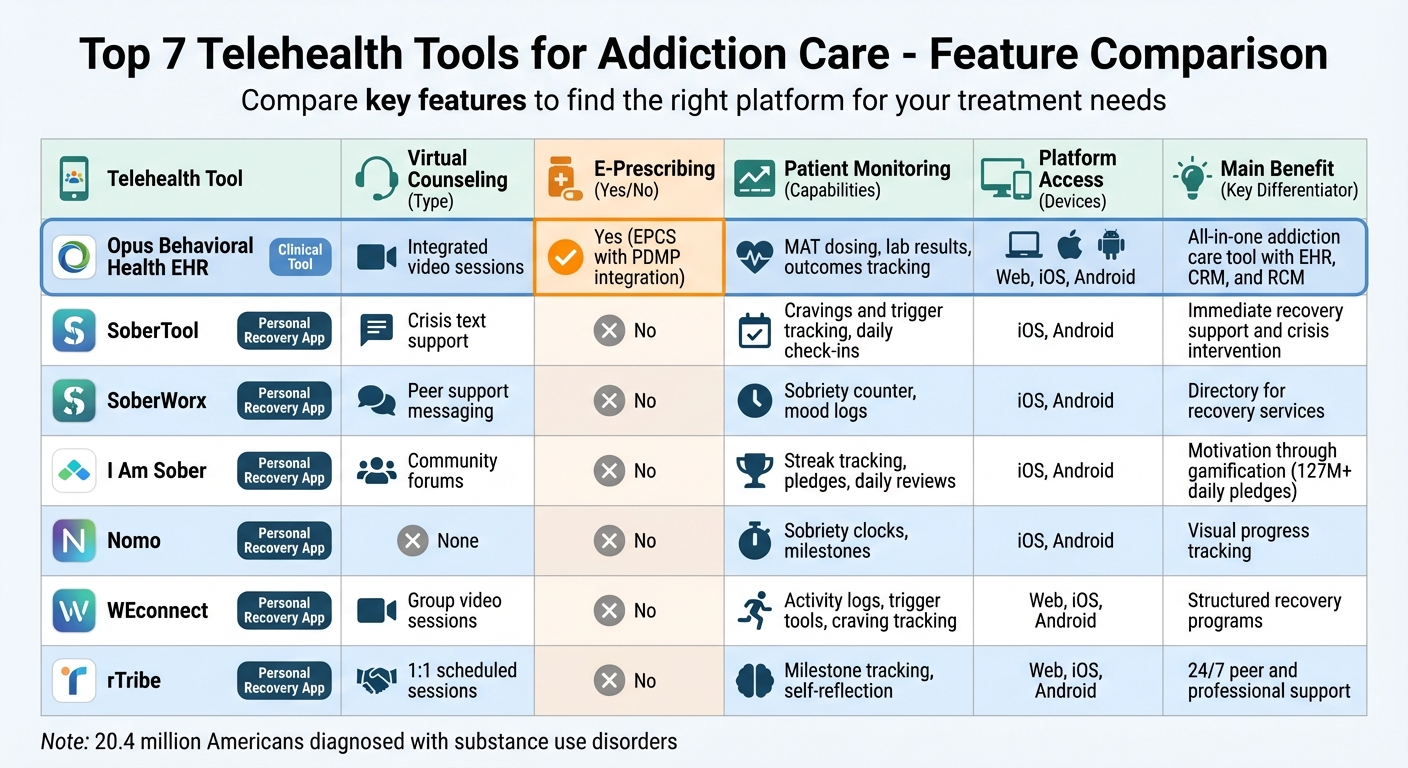
Telehealth Tools for Addiction Care: Feature Comparison Chart
1. Opus Behavioral Health EHR
Opus Behavioral Health EHR supports over 160,000 practitioners and has helped more than 44 million clients, offering a robust platform tailored for addiction treatment centers [8].
By combining telehealth, e-prescribing, and patient monitoring in one interface, it eliminates the need for juggling multiple systems. This integration makes Opus a standout option for addiction care providers.
Virtual Counseling Support
Opus simplifies telehealth with a user-friendly approach. Patients can join video sessions using a one-click SMS link sent directly to their phones - no app downloads or portal logins required [6][7]. This browser-based system works seamlessly across major browsers, ensuring accessibility [6].
The platform supports individual, group, and family therapy sessions remotely [6][7]. Clinicians can even share screens during sessions to review progress charts or mood trackers with patients in real time [7].
Additionally, the Copilot AI feature drafts progress notes, reducing documentation time by 40% [8]. By cutting down on administrative tasks, clinicians can dedicate more time to patient care.
"Telehealth is opening up doors for clients that we weren't able to extend help to before. Now that services are not restricted to a physical location, we are able to continue our therapeutic and psychiatric services from the first day of residential treatment, to the last day of outpatient treatment." – Andrea Baskin, Clinical Director [9]
E‑Prescribing Availability
Opus integrates e-prescribing directly into its EHR, streamlining medication management. This allows providers to access clinical data while prescribing medications [8]. For Medication-Assisted Treatment (MAT), it enables secure video visits for prescribing medications like buprenorphine and naltrexone [6]. The platform is fully compliant with HIPAA and 42 CFR Part 2, offering the additional privacy safeguards necessary for substance use disorder records [6]. This ensures providers meet essential regulatory requirements while managing addiction care.
Patient Monitoring Capabilities
The system incorporates AI-powered sentiment analysis and real-time alerts to help clinicians identify potential risks early [8]. Its integrated Lab Module allows facilities to order tests and receive results directly within the EHR, including urine drug screens when necessary [8]. These tools support proactive interventions, improving outcomes for patients undergoing addiction treatment.
Platform Accessibility
Accessible on any device through major browsers, Opus enhances usability with automated session reminders, which have been shown to reduce no-show rates by up to 75% [6][7]. The platform also automatically tracks session start and end times, simplifying insurance billing and compliance documentation [6]. These features make administrative workflows smoother while ensuring accurate billing for addiction treatment services.
2. SoberTool
SoberTool is a mobile app designed to provide hands-on support for individuals in addiction recovery. It combines educational resources with practical exercises to help users tackle the daily hurdles of recovery, manage cravings, and stay on track with their goals[11]. Let’s explore how its monitoring features and accessibility make it a helpful companion in the recovery process.
Patient Monitoring Features
SoberTool helps users stay focused on their recovery by tracking key milestones and reinforcing sobriety throughout each stage of the journey[5][11]. The app allows users to set medication reminders, ensuring they stick to their treatment schedules[11]. Beyond reminders, it offers real-time exercises and strategies specifically designed to help manage cravings and reduce stress during tough moments[11]. These tools provide immediate, actionable support when it’s needed most.
Easy Accessibility
As a mobile app, SoberTool works across various devices like smartphones, tablets, and computers[10]. This multi-platform availability ensures that users have recovery resources at their fingertips, no matter where they are. With its flexible access, the app helps individuals stay organized and engaged in their recovery journey, making it easier to integrate these tools into their daily lives[11].
3. SoberWorx
SoberWorx is an online directory designed to help users find recovery services, including sober living homes, rehabilitation centers, and professional interventionists.
Platform Accessibility
The platform is accessible through mobile-friendly browsers on iOS, Android, and desktop devices. Since it doesn't require downloads, users can start exploring recovery options right away.
Virtual Counseling Support
Although SoberWorx doesn’t provide direct virtual counseling, it connects users with providers who offer services like video conferencing, phone therapy, and secure messaging [5][10]. The directory also includes listings for one-on-one therapy, group support, and specialized treatment programs [5][12].
4. I Am Sober
I Am Sober is a sobriety tracking app designed to help users replace harmful habits with healthier ones. With over 127 million daily pledges and more than 30 million addictions tracked, it offers tools for accountability and a sense of community during recovery efforts [14].
This app works alongside other telehealth solutions by providing real-time progress tracking and peer support.
Platform Accessibility
You can download I Am Sober on both iOS and Android devices [14][15]. Its mobile-first design ensures users have constant access to their recovery tools, making it simple to track progress, connect with others, and find support resources - no matter where they are.
Patient Monitoring Capabilities
The app includes features like a daily pledge and review system, encouraging mindfulness and accountability at both the start and end of each day. It also tracks sobriety milestones with detailed timestamps and celebrates achievements with virtual "high-fives."
A built-in savings calculator shows how much time and money users have saved during their recovery journey. Additionally, the app incorporates elements of Cognitive Behavioral Therapy (CBT) and interactive workbooks to help users recognize triggers and build healthier habits [14].
Virtual Counseling Support
While I Am Sober doesn’t offer professional counseling, it provides robust peer support through communities organized by addiction type - such as alcohol, nicotine, marijuana, and self-harm - and by sobriety milestones.
These groups allow users to share stories, exchange advice, and encourage one another. To date, over 11 million stories have been shared, and the app has earned more than 200,000 five-star reviews [14].
5. Nomo
Nomo Sobriety Clocks is a mobile app that helps users track their sobriety journey while promoting accountability among peers. By using visual clocks to mark the time since the last substance use, it provides a constant reminder of recovery milestones. Here's a closer look at how Nomo supports users on their path to recovery.
Platform Accessibility
Nomo is designed for mobile devices, offering a simple and user-friendly interface. Its clean layout makes it easy to check progress without getting lost in complicated menus, helping users stay focused on their recovery goals.
Progress Tracking Features
The app keeps track of the time since the last use of substances or engagement in unwanted behaviors. This feature gives users a clear, visual way to monitor their progress and stay accountable to themselves as they work toward their recovery milestones.
Peer Accountability and Support
One of Nomo's standout features is its ability to connect users with accountability partners. By sharing their sobriety clocks, users can build a supportive network that keeps them motivated and engaged throughout their recovery journey. This sense of connection can make a big difference in staying committed to long-term goals.
6. WEconnect
WEconnect steps in as a recovery-focused telehealth app, combining professional counseling with tools for daily support. This app provides virtual counseling services tailored for individuals navigating recovery, ensuring professional help is just a tap away.
Virtual Counseling Support
Through WEconnect, users can access licensed therapists and addiction counselors via video calls, phone sessions, or secure messaging. The platform offers options like one-on-one therapy, group sessions, and specialized addiction counseling, catering to diverse recovery needs [5].
Beyond addressing substance use disorders, WEconnect also supports co-occurring mental health challenges such as anxiety, depression, and trauma, offering a well-rounded care approach [13]. This integration ensures that users receive consistent and holistic support throughout their recovery journey.
Patient Monitoring Capabilities
WEconnect goes beyond therapy sessions by equipping users with tools to navigate daily recovery hurdles. Features include tracking cravings, identifying triggers, and practicing stress management techniques. These tools not only help patients stay on track but also provide valuable insights for providers, enabling them to adjust treatment plans based on real-time data [11].
Platform Accessibility
Built with mobile users in mind, WEconnect ensures recovery support is always at hand. The app consolidates essential services, allowing users to chat with therapists, schedule appointments, and communicate with prescribers - all within a single platform [10]. This streamlined approach makes it easier for users to stay engaged and connected during their recovery process.
7. rTribe
rTribe is a mobile-first recovery platform that combines peer support with professional counseling, offering immediate, around-the-clock assistance.
Virtual Counseling Support
With rTribe, users can schedule one-on-one counseling sessions tailored to their needs, whether for crisis intervention or ongoing guidance. But it doesn’t stop there. The app also fosters a sense of belonging through its "Tribes" feature. This allows members to connect with others who share similar recovery journeys, exchanging stories and encouragement. By blending individual counseling with a strong community element, rTribe creates a well-rounded support system.
Patient Monitoring Capabilities
The app includes tools for tracking progress. While it doesn’t focus heavily on clinical data, users can log milestones, reflect on their journey, and spot recurring patterns. This self-monitoring approach helps individuals stay mindful of their progress while ensuring they remain connected to professional help when needed.
Platform Accessibility
rTribe is available on both iOS and Android, making it easy to access resources and community support anytime. Additionally, healthcare providers can use a web-based dashboard to monitor user engagement remotely, ensuring a seamless connection between users and their care teams.
Feature Comparison
Here's a quick look at how seven telehealth tools stack up in terms of key features, helping you evaluate which might be the best fit for your needs.
|
Tool |
Virtual Counseling |
E-Prescribing |
Patient Monitoring |
Platform Access |
Pricing Model |
Main Benefit |
|---|---|---|---|---|---|---|
|
Opus Behavioral Health EHR |
Integrated video sessions |
EPCS with PDMP integration |
MAT dosing, toxicology results, outcomes tracking |
Web, iOS, Android |
Custom enterprise pricing |
Combines EHR, CRM, and RCM in one platform |
|
SoberTool |
Crisis text support |
Not available |
Daily check-ins, trigger tracking |
iOS, Android |
Free with premium options |
Tools for immediate crisis intervention |
|
SoberWorx |
Peer support messaging |
Not available |
Sobriety counter, mood logs |
iOS, Android |
Subscription-based |
Focus on community accountability |
|
I Am Sober |
Community forums |
Not available |
Streak tracking, pledge system |
iOS, Android |
Free with in-app purchases |
Gamification to boost motivation |
|
Nomo |
Not available |
Not available |
Multiple sobriety clocks, milestone celebrations |
iOS, Android |
Free |
Tracks progress visually |
|
WEconnect |
Group video sessions |
Not available |
Activity participation logs |
Web, iOS, Android |
Membership fees |
Offers structured recovery programs |
|
rTribe |
One-on-one scheduled sessions |
Not available |
Milestone logging, self-reflection |
Web, iOS, Android |
Subscription-based |
24/7 access to peer and professional support |
Opus Behavioral Health EHR stands out for its clinical focus, offering features like e-prescribing controlled substances (EPCS) with PDMP integration, automated workflows, lab integrations, and advanced reporting.
This makes it especially valuable for facilities managing medication-assisted treatments, including buprenorphine and other controlled substances [1][2].
For providers requiring remote patient engagement tracking, Opus, WEconnect, and rTribe offer web-based dashboards, making them ideal for structured treatment programs [3][4].
This summary highlights the variety of features available, ensuring treatment centers can find a tool that aligns with their operational and clinical priorities. Whether the focus is on robust clinical management or fostering patient engagement, there's a solution for every need.
Conclusion
Telehealth tools have become a game-changer for expanding access to care and improving its quality. They help tackle challenges like transportation issues and social stigma, especially for patients in rural or underserved areas.
Studies reveal that telehealth delivers results comparable to in-person treatment when it comes to patient satisfaction, substance use outcomes, and retention rates. This highlights how critical it is to select a platform that aligns with your clinical model.
When evaluating telehealth platforms, focus on features that complement your treatment approach and operational needs. For instance, residential programs may require tools for bed management, medication-assisted treatment (MAT) tracking, and EPCS with PDMP integration.
On the other hand, outpatient clinics benefit from tools that simplify group therapy documentation and offer flexible scheduling options. As Dayna Riddle from Patagonia Health aptly stated, "Choosing the right substance abuse EMR isn't just about efficiency - it's about delivering better care."
Look for platforms that ensure compliance with 42 CFR Part 2, integrate seamlessly with labs and pharmacies to minimize manual errors, and support smooth transitions as patients move through different levels of care. For example, the ability to document an 8-person group session or transition a patient from residential care to an intensive outpatient program (IOP) is invaluable [2][3].
The most efficient facilities in 2026 will rely on platforms tailored to their specific care modalities. Whether your focus is on comprehensive clinical management with integrated billing or tools that keep patients engaged in their recovery journey, there’s a solution to meet your needs. The key is to identify the features that best align with your treatment philosophy and operational priorities.
FAQs
How do I choose the right telehealth tool for addiction care?
When selecting a telehealth platform for addiction treatment, it's essential to prioritize features that meet the unique needs of this field. Look for tools that include virtual counseling, e-prescribing, and patient monitoring, while ensuring they comply with privacy regulations like 42 CFR Part 2.
Opt for software specifically designed for addiction care. These purpose-built tools align with clinical workflows and help maintain compliance with strict regulatory standards. For example, platforms like Opus Behavioral Health EHR provide telehealth solutions tailored to addiction and behavioral health centers, helping streamline care delivery and enhance patient outcomes.
What should I look for in HIPAA and 42 CFR Part 2 compliance?
For ensuring compliance with HIPAA and 42 CFR Part 2, it's crucial to prioritize a few key practices:
Granular consent management: This allows individuals to have precise control over who can access their sensitive information and for what purposes.
Strict control of SUD record disclosures: Substance Use Disorder (SUD) records require extra safeguards to ensure they're only shared under legally permissible circumstances.
Segmentation of SUD records: Keeping SUD records separate from general medical records prevents unauthorized access and ensures compliance with regulations.
Comprehensive audit trails: Detailed logs of access and disclosures help maintain transparency, track compliance, and address any potential issues promptly.
These measures work together to protect patient privacy, adhere to legal requirements, and ensure sensitive information is handled with care.
Can telehealth support medication-assisted treatment (MAT) safely?
Telehealth provides a safe and effective way to support medication-assisted treatment (MAT).
It improves access to care, boosts patient retention, and facilitates the use of medications like Suboxone for opioid use disorder. Licensed telehealth clinics operate under strict guidelines to ensure treatments are both safe and effective.



- Behavioral Health
- EHR Systems
- Addiction Treatment EHR
- mental health
- Telehealth
- addiction treatment
- Behavioral health facility
- Substance Abuse Disorder
- behavioral Health center
- HIPPA Compliant
- ehrsoftware
- PTSD
- behavioral health ehr
- Depression
- hipaa
- Anxiety
- MentalHealthMatters
- RCM
- claim denials
- clinical documentation
- mental health awareness
- screening tools

September 15, 2026
September 15, 2026

September 14, 2026

September 11, 2026

September 10, 2026

September 09, 2026
Recommended Posts

Thursday, December 11, 2025
Top Compliance Features in SUD EHRs
SUD treatment centers face strict privacy rules under HIPAA and 42 CFR Part 2. Falling short of these regulations risks ...
Friday, April 17, 2026
EHR Software That Simplifies Addiction Treatment Care
Addiction treatment centers face unique challenges, from strict privacy regulations under 42 CFR Part 2 to managing ...

Tuesday, November 25, 2025
How Analytics Enhances Patient Outcomes in Addiction Care
Analytics is transforming addiction care by using patient data to create personalized, effective treatment plans. This ...